Penetrometer for Mortar
A penetrometer is used to measure the penetration resistance of mortar and concrete in order to determine their setting times. There are different types of penetrometers, including hydraulic and spring-reaction models. Key points include:
- Hydraulic penetrometers: These use hydraulic pressure to measure resistance to penetration. They are commonly used in laboratories to determine the initial and final setting times of concrete mixes, mortar, and grouts.
- Spring-reaction penetrometers: These use a spring mechanism to measure resistance. They are easy to use and can be applied both in the field and in laboratories.
Vicat Apparatus for Mortar
The Vicat apparatus is used to determine the setting times of cement and mortar by measuring the penetration depth of a needle into a cement paste. There are two main types of Vicat apparatus:
- Manual Vicat apparatus: These require manual operation, where a needle is released into the cement paste at fixed intervals to measure penetration depth. This provides information on both initial and final setting times.
Download brochure
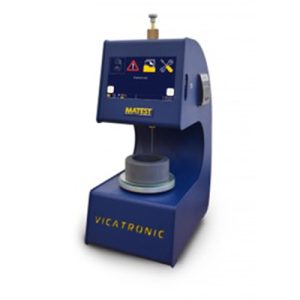
- Automatic Vicat apparatus: These are more advanced and automate the testing process. They provide more accurate and repeatable results compared to manual methods. Automatic Vicat apparatus can also be connected to a PC for data analysis.
Download brochure
Both of these instruments are essential for ensuring that mortar and concrete meet the required standards and quality requirements in construction projects.
Standards:
EN 1015
EN 413
EN 459
EN 480
EN 196-3
ASTM C191

We support success from the ground up
